

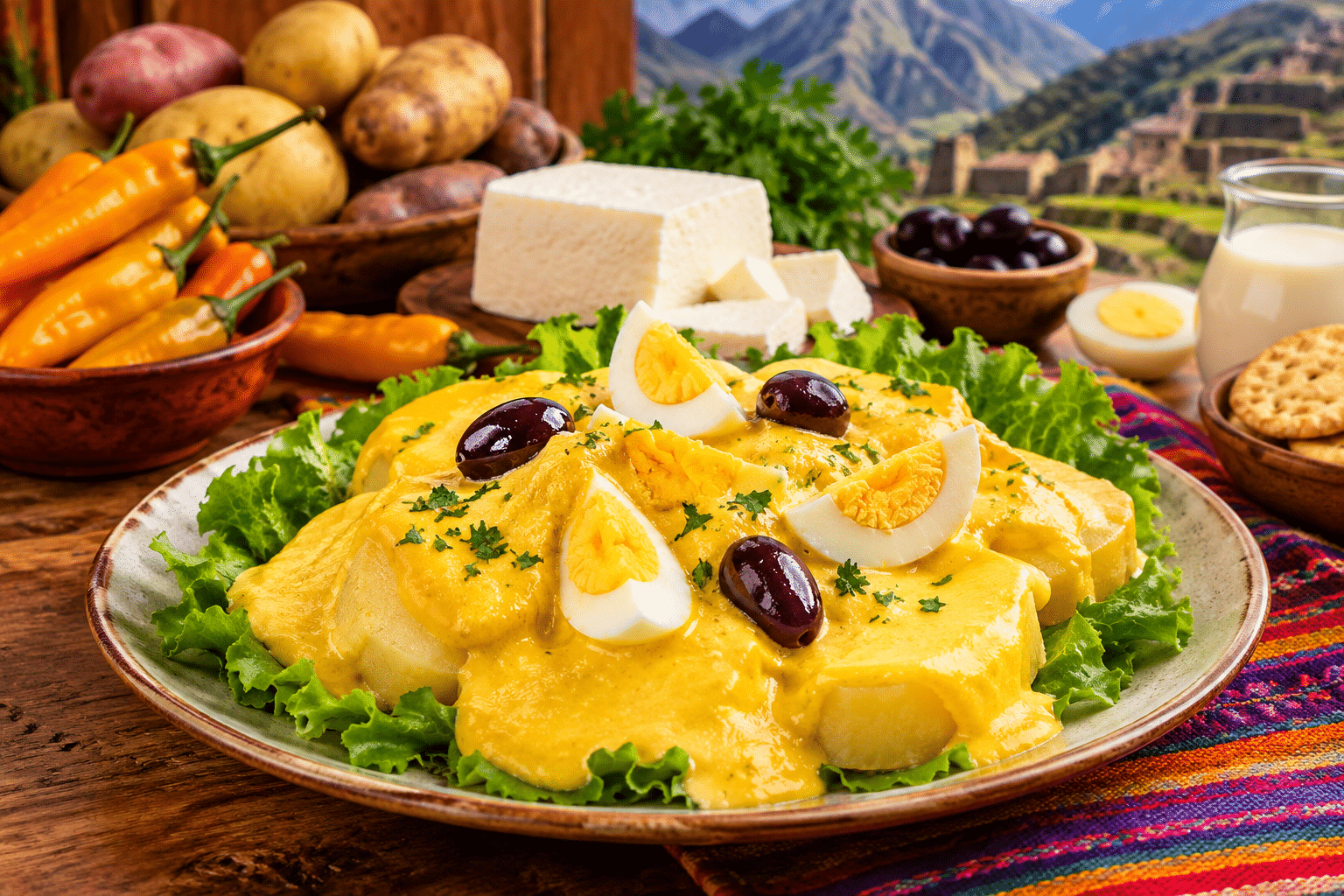
Some of the best dishes in the world do not need fancy ingredients, complicated cooking methods, or hours spent in the kitchen. Sometimes, all it takes is a few everyday ingredients, a little creativity, and a recipe that has been loved for generations. Papa a la Huancaína is a perfect example of this kind of cooking.
At first, you might look at this traditional Peruvian dish and think it is simply boiled potatoes covered in a yellow sauce. But once you learn more about it, you begin to understand why it holds such a special place in Peru’s food culture. The potatoes are soft and comforting, the sauce is creamy with a gentle kick of pepper, and the toppings bring everything together in a way that feels both simple and satisfying.
What makes this dish particularly interesting is that it does not try too hard to impress. It relies on familiar ingredients, carefully combined, to create a flavor that stays with you. For anyone who enjoys discovering traditional foods from different parts of the world, Papa a la Huancaína is a wonderful place to start.
Getting to Know Papa a la Huancaína
Papa a la Huancaína is a well-known Peruvian dish made with boiled potatoes and a creamy sauce prepared with cheese, aji amarillo peppers, milk, and crackers. It is commonly served with lettuce, slices of hard-boiled egg, and black olives.
The name is associated with Huancayo, a city in Peru’s central highlands. Today, however, the dish is enjoyed across the country and has become one of the familiar faces of Peruvian cuisine.
There is something lovely about the way these ingredients work together. Potatoes have a mild, earthy taste, making them an ideal base for a sauce with a little more personality. The cheese adds richness, the milk creates a smooth texture, and the aji amarillo gives the sauce its characteristic golden color and distinctive flavor.
The finished dish is creamy, savory, and slightly spicy, although the heat can easily be adjusted to suit different preferences. The eggs add a little extra substance, the olives provide a salty contrast, and the lettuce brings freshness to the plate.
It is the kind of food that feels right at a family lunch, but it can also make an attractive starter when you are preparing a meal for guests. Its simplicity is part of its charm.
A Little History Behind This Peruvian Favorite
To appreciate Papa a la Huancaína, it helps to understand the country it comes from.
Peru has one of the world’s richest culinary traditions, shaped by its geography, Indigenous cultures, local agriculture, and centuries of cultural exchange. The Andes, the Amazon, and the Pacific coast each contribute different ingredients and cooking traditions to Peruvian food.
Potatoes have a particularly important place in this story. The Andes are a center of potato domestication, and Indigenous communities in the region developed and cultivated many varieties long before potatoes became a major food around the world. Even today, Peru is known for its remarkable diversity of potatoes.
Papa a la Huancaína celebrates this ingredient in a way that feels natural to the region. Instead of transforming potatoes into something unrecognizable, the dish allows them to remain the star while adding a flavorful sauce that makes them even more enjoyable.
The precise origin of the recipe is not completely certain. One popular account connects its history to railway construction in central Peru during the nineteenth century. According to this story, local women prepared potatoes with a cheese and pepper sauce to feed workers building railway lines toward Huancayo.
Although this account is best treated as a traditional story rather than a definitively established history, it offers an appealing picture of how recipes can develop. A practical meal prepared for hardworking people can eventually become a dish enjoyed by families throughout a country.
That is one of the most interesting things about traditional cooking. A recipe does not always begin in a famous restaurant or a professional kitchen. Sometimes, it begins with people making the best of the ingredients available to them.
What Gives Papa a la Huancaína Its Distinctive Flavor?
The beauty of this dish lies in its ingredients. Each one has a purpose, and together they create a sauce that is difficult to confuse with anything else.
Potatoes: The Comforting Foundation
Potatoes are the heart of the recipe. They provide the soft texture and gentle flavor that allow the sauce to stand out.
In Peru, cooks may use local potato varieties, many of which have their own colors, textures, and flavors. If you are preparing the dish elsewhere, yellow potatoes or other varieties that hold their shape after boiling work well.
The important thing is not to overcook them. You want potatoes that are tender enough to enjoy easily but firm enough to remain in neat slices when arranged on a plate.
Aji Amarillo: The Flavor That Makes It Peruvian
If there is one ingredient that gives Papa a la Huancaína much of its personality, it is aji amarillo.
This Peruvian pepper is known for its yellow-orange color and fruity flavor. It brings a pleasant warmth to the sauce without necessarily making it overwhelmingly hot.
The pepper is important because the sauce is not simply a cheese dressing with a little chili added. Aji amarillo contributes a distinctive taste that helps give the dish its identity.
If you live outside Peru, finding fresh aji amarillo may take some effort. Fortunately, prepared aji amarillo paste is available through many Latin American grocery stores and online retailers. It is a practical option for home cooks who want to recreate the traditional flavor.
Cheese, Milk, and Crackers: The Secret to the Sauce
The sauce is what turns an ordinary plate of potatoes into something memorable.
Mild fresh white cheese provides the savory base, while evaporated milk helps create a creamy consistency. Plain crackers are commonly blended into the mixture to thicken it, and a little oil helps bring the ingredients together.
When blended properly, these ingredients create a smooth sauce that coats the potatoes without being too runny. The flavor should be rich but balanced, allowing the pepper to come through without overpowering the cheese.
Different cheeses can produce slightly different results, so it is worth experimenting with what is available locally. A mild cheese is generally a good starting point because it allows the aji amarillo to remain noticeable.
Eggs, Olives, and Lettuce: Small Details That Matter
The traditional garnishes might seem like minor additions, but they make a difference.
Lettuce gives the plate a fresh base, hard-boiled eggs add richness, and black olives bring a salty flavor that contrasts nicely with the creamy sauce.
These ingredients also make the presentation more attractive. The golden sauce, white egg, dark olives, and green lettuce create a colorful plate without requiring elaborate decoration.
Sometimes, the simplest finishing touches are the ones that make a dish feel complete.
How to Make Papa a la Huancaína at Home
One of the reasons I would recommend this dish to anyone exploring Peruvian food is that it is surprisingly easy to prepare. You do not need professional cooking equipment or advanced skills. A pot for boiling the potatoes and a blender for the sauce will do most of the work.
Ingredients for Four People
- 800 g to 1 kg of potatoes
- 200–250 g of mild fresh white cheese
- ½ to 1 cup of evaporated milk
- 2–3 tablespoons of aji amarillo paste
- 4–6 plain crackers
- 2–3 tablespoons of vegetable oil
- Salt to taste
- A few lettuce leaves
- 2 hard-boiled eggs
- Black olives for serving
Step 1: Cook the Potatoes
Wash the potatoes and place them in a pot of water. Boil until they are tender when pierced with a knife. Drain them and allow them to cool slightly before peeling them if desired.
Once they are cool enough to handle, cut them into thick slices. Try to keep the slices reasonably even so they are easy to arrange and serve.
Step 2: Blend the Sauce
Place the cheese, aji amarillo paste, evaporated milk, crackers, and vegetable oil in a blender.
Blend until the mixture is smooth. If the sauce looks too thick, add a little more milk. If it is too thin, add another cracker and blend again.
Take your time with this part. A smooth sauce makes a noticeable difference to the finished dish.
Step 3: Taste and Adjust
Taste the sauce before serving. Add salt if needed, and adjust the amount of aji amarillo according to your preference.
If you enjoy a stronger pepper flavor, add a little more paste. If you prefer something milder, start with a smaller amount and build up gradually.
Remember that different cheeses contain different amounts of salt, so it is better to taste before adding too much seasoning.
Step 4: Arrange and Serve
Place the lettuce leaves on a serving plate and arrange the potato slices on top. Spoon the sauce generously over the potatoes, making sure they are well covered.
Finish with slices of hard-boiled egg and a few black olives.
Papa a la Huancaína can be served chilled or at room temperature, depending on your preference. If preparing it in advance, keep it refrigerated and add the garnishes just before serving for a fresher presentation.
And there you have it: a traditional Peruvian dish made with simple ingredients and very little fuss.
Making the Recipe Your Own
One of the pleasures of home cooking is discovering how a traditional recipe fits into your own kitchen.
Perhaps you prefer a little more pepper in the sauce. Maybe the cheese available in your area is different from the variety commonly used in Peru. You might even need to substitute an ingredient because a particular product is difficult to find.
These adjustments are part of everyday cooking. They allow people in different countries to enjoy recipes that originated thousands of miles away.
Still, if you want to preserve the character of Papa a la Huancaína, keep the main idea intact: tender potatoes served with a smooth, creamy sauce flavored with aji amarillo.
You can serve it as a starter before a larger meal, offer it as a side dish, or make it the centerpiece of a simple lunch. It also works well on a shared platter, especially when you want something that looks inviting without requiring hours of preparation.
For a fuller Peruvian-inspired meal, consider serving it alongside other traditional dishes, such as grilled meats or a fresh salad. The mild potatoes and creamy sauce can complement a variety of flavors.
More Than Just a Plate of Potatoes
What I find most appealing about dishes like Papa a la Huancaína is the reminder that food is about more than satisfying hunger.
Every traditional recipe carries traces of the people and places that helped shape it. Sometimes those traces appear in a locally grown ingredient. Other times, they are found in a cooking method passed from one generation to the next or in a dish that families continue to prepare for special occasions and everyday meals.
Papa a la Huancaína brings together the history of Andean potatoes, the distinctive flavor of a Peruvian pepper, and the resourcefulness that makes traditional home cooking so interesting.
It also shows that a memorable meal does not have to be expensive. A few potatoes, a handful of carefully chosen ingredients, and a little attention to flavor can produce something worth sharing.
For someone discovering Peruvian cuisine, this dish offers an accessible introduction to the country’s food culture. For someone who already knows and loves it, the familiar combination of potatoes and golden sauce may bring back memories of meals enjoyed with family and friends.
And for anyone who simply enjoys good food, it is an invitation to try something new.
Final Thoughts: Why Papa a la Huancaína Deserves a Place in Your Kitchen
Papa a la Huancaína is proof that simple food can have plenty of character. It combines soft potatoes, creamy cheese sauce, the gentle warmth of aji amarillo, and familiar garnishes to create a dish that is both comforting and distinctive.
Its history connects it to Peru’s rich culinary heritage, while its straightforward preparation makes it accessible to home cooks around the world.
You do not need to travel to Peru to appreciate what makes this dish special. With a few suitable ingredients and a little curiosity, you can bring a taste of Peruvian cooking to your own table.
Prepare it for a relaxed weekend lunch, share it with friends, or serve it when you want to explore a different food tradition without making cooking unnecessarily complicated.
The next time you see a plate of Papa a la Huancaína, look beyond the potatoes and the golden sauce. Think about the agricultural traditions behind the ingredients, the cooks who have kept the recipe alive, and the simple pleasure of sharing food with other people.
That is what makes traditional dishes so valuable. They give us a way to experience another culture through something familiar, comforting, and delicious.
Sometimes, the most memorable food is not the most complicated. It is the food that brings people together, tells a story, and leaves you wanting another bite. Papa a la Huancaína does all three.