

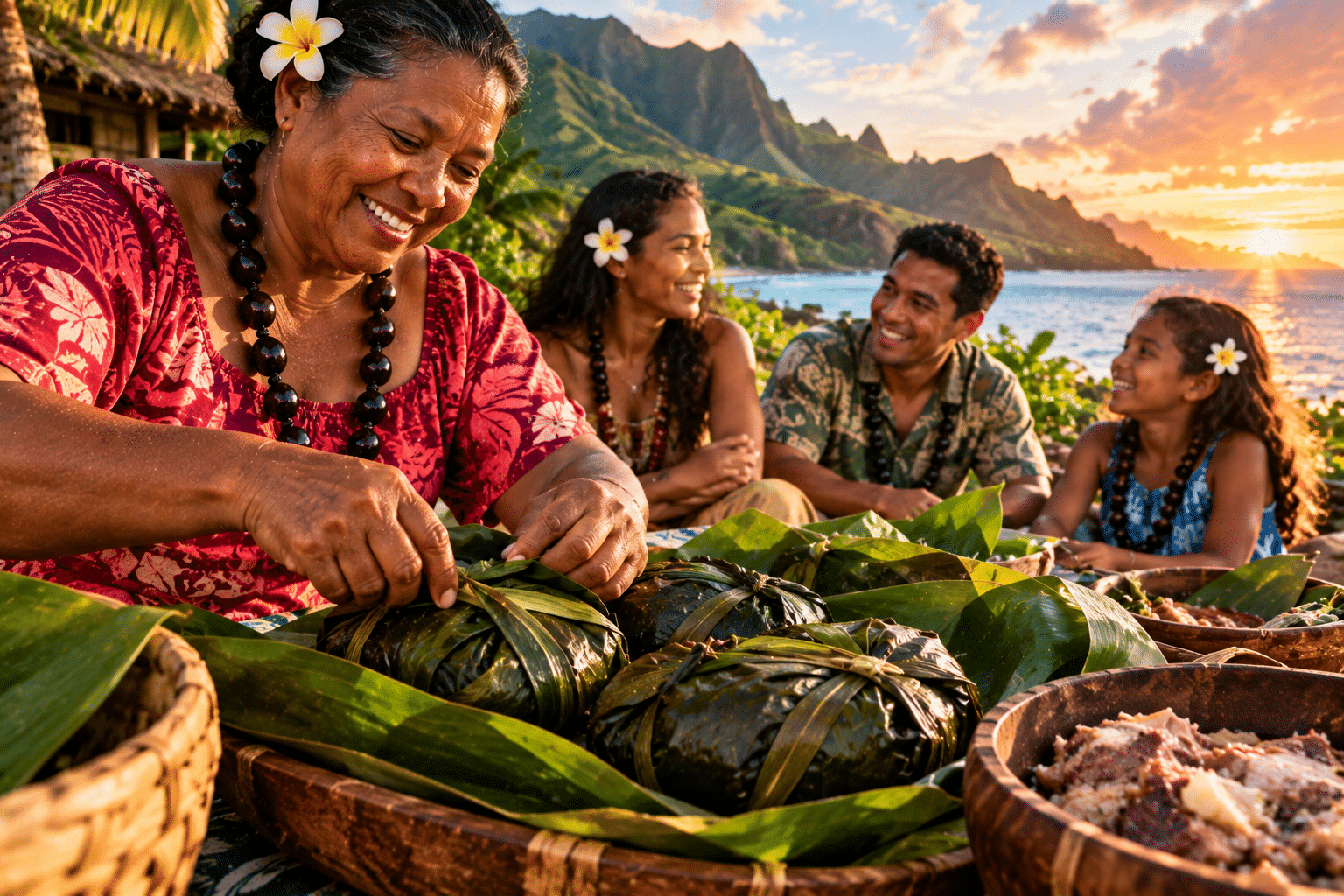
Some foods tell their stories before you even take the first bite. You see the leaves carefully folded around the ingredients, feel the warmth rising from the cooking pot, and begin to appreciate that what you are looking at is more than a meal. It is a tradition shaped by the land, the people, and generations of shared knowledge.
In Hawaiʻi, one such dish is laulau — a beloved traditional food made by wrapping pork, fish, or other ingredients in leaves and cooking them slowly until everything becomes tender, fragrant, and full of flavour.
Simple in appearance but rich in cultural meaning, laulau offers a glimpse into the culinary heritage of the Hawaiian Islands. It reminds us that some of the most meaningful dishes are not built around complicated techniques or expensive ingredients. Instead, they rely on patience, practical knowledge, and an understanding of how different ingredients work together.
At Tribal World, we believe these are the kinds of food stories worth exploring: the ones that connect everyday cooking with cultural identity, ancestral knowledge, and a sense of belonging.
What Exactly Is Laulau?
Laulau is a traditional Hawaiian dish in which ingredients are wrapped in leaves and cooked slowly, traditionally using methods that allow the food to become tender and moist.
A familiar version features pork wrapped in luʻau leaves, which come from the taro plant, sometimes with additional ingredients such as salted fish. The wrapped bundles are traditionally cooked in an underground oven known as an imu, although modern preparations may use a steamer or another suitable cooking method.
As the food cooks, the leaves soften and the ingredients develop a rich, savoury flavour. The result is tender meat or fish with a distinctive taste that reflects the ingredients and the cooking process.
The leaves are an important part of the experience, but they also require care. Taro leaves must be thoroughly cooked before eating because raw taro leaves contain irritating calcium oxalate crystals. Proper preparation makes them suitable for consumption.
What makes laulau particularly interesting is how a few basic elements — leaves, filling, heat, and time — come together to create something deeply satisfying.
There is no need for an elaborate presentation. The care that goes into preparing the food speaks for itself.
The Importance of Taro in Hawaiian Culture
To understand laulau, we need to look at one of the most important plants in Hawaiian food culture: kalo, the Hawaiian name for taro.
Taro is a root crop cultivated across many Pacific Island communities, but in Hawaiʻi, kalo holds significance that extends well beyond its role as a source of food.
In Native Hawaiian tradition, kalo is closely connected to the moʻolelo, or traditional stories, surrounding the origins of the Hawaiian people. In one well-known genealogy, kalo is associated with Hāloa, the elder sibling of the Hawaiian people, establishing a relationship of kinship between people and the plant.
This understanding reflects a worldview in which the natural environment is not simply a collection of resources to be used. It is part of a network of relationships involving family, responsibility, land, and community.
Kalo is also used to make poi, a staple Hawaiian food prepared from cooked taro that has been pounded and mixed with water. Its leaves are used in dishes such as laulau and other traditional preparations.
The plant therefore connects different parts of Hawaiian food culture, from everyday nourishment to cultural identity and traditional knowledge.
When we learn about laulau, we begin to see that the leaves surrounding the filling are not just a practical cooking material. They come from a plant with a profound place in Hawaiian life.
The Art of Cooking with Patience
One of the most beautiful things about traditional laulau is the cooking process.
In traditional preparations, food may be cooked in an imu, an underground oven heated with hot stones. The food is arranged and covered using suitable leaves and other materials, allowing heat and steam to cook the ingredients over time.
This method requires preparation, coordination, and an understanding of how heat moves through the cooking environment.
The food cannot simply be rushed. The ingredients need enough time to become tender, and the cook must understand how to prepare and wrap them properly.
Modern kitchens offer other ways to make laulau, particularly through steaming, but the underlying principle remains familiar: allow the ingredients to cook gently until their flavours and textures come together.
There is something worth appreciating in that approach.
We live in a world where many things are designed to happen as quickly as possible. Traditional slow-cooking methods remind us that some results depend on allowing time to do its work.
A carefully prepared meal can become an opportunity to slow down, share responsibilities, and enjoy the process as much as the final result.
Of course, laulau is not simply about taking things slowly. It is also about knowing what to do, when to do it, and how to work with the ingredients rather than against them.
That knowledge is part of the craft.
Food That Connects Generations
Traditional dishes often survive because they are prepared repeatedly in homes and communities, where knowledge passes naturally from one generation to the next.
Laulau offers a wonderful example of how food preparation can carry practical skills and cultural memories together.
Learning to prepare the leaves, portion the filling, wrap the bundles, and cook them correctly involves more than following a list of instructions. It can also involve watching an experienced cook, listening to family stories, and understanding the preferences that make a particular preparation familiar.
Different families may have their own ways of seasoning or assembling laulau. Ingredients and methods can vary, and not every household follows exactly the same tradition.
That variation is part of what makes food heritage so interesting. A traditional dish can retain its identity while still reflecting the people who prepare it.
For someone who grew up eating laulau, its flavour may bring back memories of family gatherings, community celebrations, or meals shared with people they love.
For someone discovering it for the first time, it offers an opportunity to learn about Hawaiian culture through something tangible and welcoming.
Food creates these connections in a special way. It allows knowledge to be shared through the senses, turning history into an experience that people can enjoy together.
More Than a Recipe: A Relationship with the Land
Hawaiian food traditions are closely connected to the islands’ natural environment.
The availability of particular crops, the surrounding ocean, and local growing conditions have all influenced what people cultivate, gather, prepare, and eat.
Laulau reflects this relationship through its use of taro leaves and locally familiar ingredients, although modern versions may use ingredients obtained from different sources.
Traditional Hawaiian food knowledge also reminds us that caring for the environment and caring for a community are closely connected.
Kalo cultivation, for example, has long been associated with loʻi, irrigated taro fields that depend on careful water management. These agricultural systems reflect accumulated knowledge about growing conditions, water movement, and the relationship between people and the land.
The Hawaiian concept of mālama ʻāina, often understood as caring for or stewarding the land, expresses an important principle: the environment deserves care because human wellbeing is connected to its health.
This idea should not be reduced to a slogan. It is connected to cultural responsibilities, relationships, and practices that have developed within Hawaiian communities.
Laulau gives us a small but meaningful entry point into this wider story.
Behind the dish are plants that must be cultivated, ingredients that must be prepared, and knowledge that helps people make use of what their environment provides.
When we appreciate traditional food, we can also learn to pay greater attention to the places and relationships that make it possible.
What Makes Laulau Special Today?
Laulau continues to be enjoyed in Hawaiʻi, appearing in traditional meals, local food establishments, and gatherings where familiar island dishes bring people together.
It is often served as part of a larger plate meal, alongside foods such as rice and poi, with other accompaniments depending on the setting.
Its appeal lies partly in its comforting texture and flavour, but also in its ability to connect the present with an enduring culinary tradition.
Like many traditional foods, laulau has also adapted to modern circumstances. Home cooks may use contemporary kitchen equipment, and ingredients can differ according to personal preferences or availability.
Adaptation does not automatically mean losing cultural identity. Traditions remain alive because people continue to practise them, teach them, and make decisions about how they fit into contemporary life.
At the same time, understanding the cultural roots of a dish helps us appreciate that it is more than just another item on a menu.
Laulau belongs to a wider Hawaiian food heritage shaped by Native Hawaiian knowledge, relationships with the land, and the histories of the islands.
Approaching it with curiosity and respect allows us to enjoy the food while recognising the culture behind it.
What Laulau Can Teach Us About Our Own Food Traditions
There is a lesson in laulau that reaches far beyond Hawaiʻi.
Every culture has dishes that may appear ordinary to outsiders but hold special meaning for the people who prepare them. They might involve wrapping food in leaves, cooking over hot stones, fermenting ingredients, grinding grains, or preparing a meal that requires several people to work together.
These practices often carry knowledge that is easy to overlook when we focus only on the finished dish.
They show us how people have learned to work with their surroundings, make use of available ingredients, and create meals that bring families and communities together.
They also remind us that cultural heritage does not exist only in historic buildings, ceremonial objects, or written records. It lives in everyday actions: preparing food, sharing a recipe, teaching a child, or gathering around a table.
At Tribal World, we see these traditions as opportunities to appreciate both the diversity of human cultures and the experiences that connect us.
We may come from different places, speak different languages, and prepare food in different ways. Yet the desire to nourish our families, share what we have, and preserve meaningful traditions is something many of us understand.
Laulau offers a beautiful example of that shared human experience.
Beyond the Leaves, There Is a Story
The next time you encounter laulau, look beyond the tender filling and the leaves that surround it.
Think about the kalo plant and its place in Hawaiian culture. Consider the skill involved in preparing and cooking the bundles, and the knowledge passed between people who have made the dish part of their lives.
Remember, too, that Hawaiian food traditions are diverse and living. No single dish can represent an entire culture, but every dish can help us begin a more thoughtful conversation about its history and values.
Sometimes, the best way to discover a culture is to start with something simple: a meal, an ingredient, or a traditional method that has endured because people continue to find meaning in it.
At Tribal World, we believe every traditional dish offers a chance to listen, learn, and appreciate the people behind the food.
A question for our community: Have you ever tried laulau, or would you like to experience it? And in your own culture, is there a traditional dish wrapped in leaves, slowly cooked, or prepared in a way that connects food with family and heritage?
Share your stories with us. Your favourite traditional meal might introduce someone else to a culture they have never explored before.
Tribal World — celebrating the people, traditions, and everyday stories that make our world wonderfully diverse.
#TribalWorld #Laulau #HawaiianCulture #NativeHawaiianTraditions #HawaiianFood #FoodHeritage #TraditionalCooking #IndigenousKnowledge #CulturalHeritage #PacificIslands #FoodAndCulture