

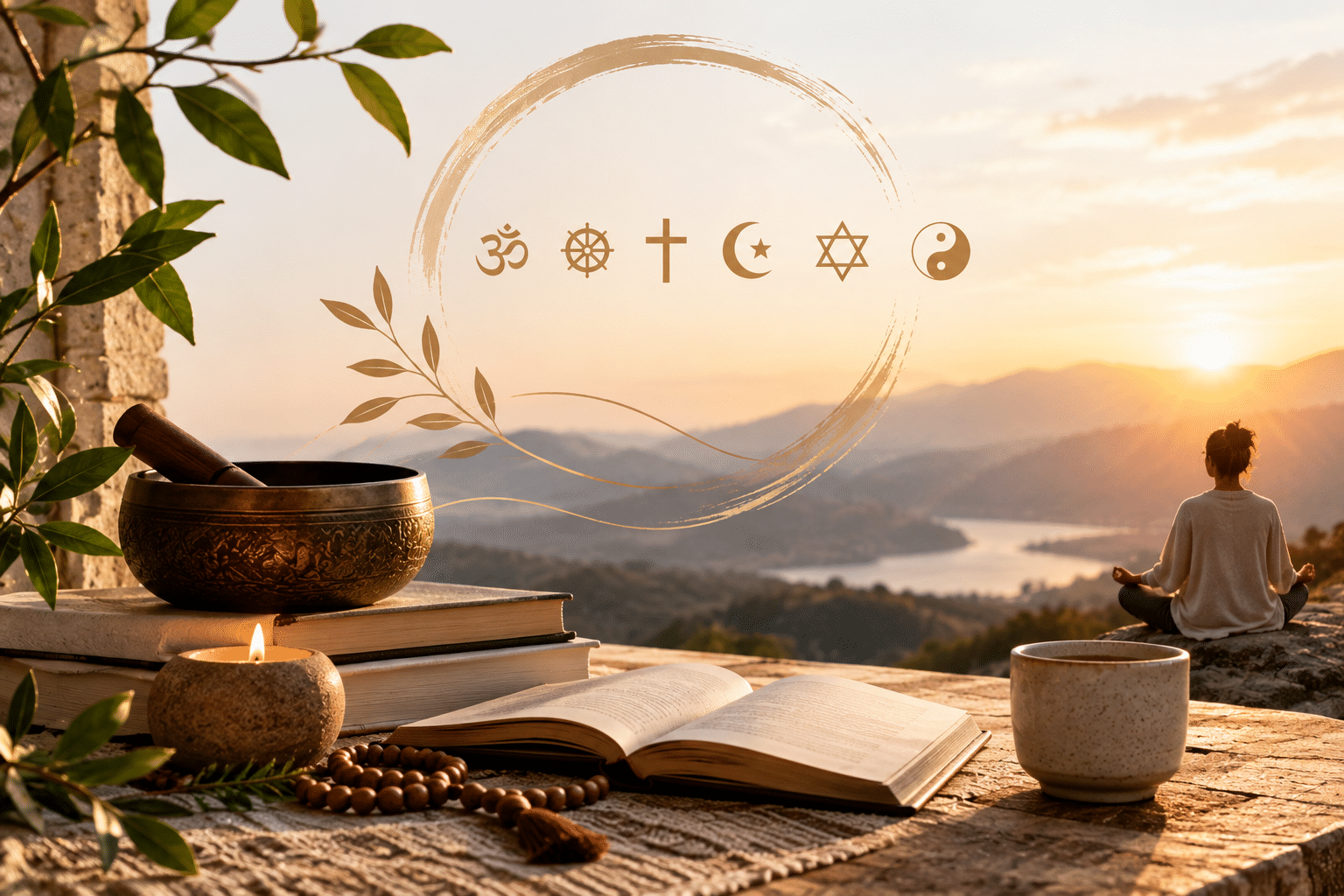
Life today moves at an incredible pace. Between work, family responsibilities, social media, and the constant pressure to keep up, it is easy to lose touch with ourselves and the things that truly matter. We can spend entire days being busy without feeling fulfilled, connected, or at peace. In these moments, many of us begin searching for something deeper: a sense of purpose, a feeling of belonging, or simply a little quiet in the middle of the noise.
This is where spiritual traditions can offer something meaningful.
For thousands of years, people across different cultures have turned to spiritual practices to understand life, find comfort during difficult times, and build stronger connections with themselves, their communities, and the world around them. These traditions have been passed down through generations, carrying lessons about compassion, gratitude, patience, humility, and the importance of living with intention.
Whether expressed through prayer, meditation, traditional ceremonies, storytelling, or acts of kindness, spirituality continues to hold an important place in human life. And the beautiful thing is that we do not need to live in another time or completely change our lifestyles to learn from its wisdom.
Sometimes, the journey begins with something as simple as taking a deep breath, sitting quietly with our thoughts, or showing kindness to someone who needs it.
Understanding the Heart of Spiritual Traditions
Spirituality means different things to different people. For some, it is closely connected to religion and a relationship with God or a higher power. For others, it is found in nature, personal reflection, cultural traditions, or the search for a deeper understanding of life.
At its heart, a spiritual tradition offers a way of making sense of our experiences and connecting with something beyond our immediate concerns. It may help us understand our place in the world, guide our decisions, or remind us of the values we want to live by.
These traditions are not simply stories from the past. Many remain active parts of everyday life, adapting to changing circumstances while preserving important teachings from previous generations.
Across cultures, spiritual practices often encourage people to pause and reflect. They remind us that life is not measured only by what we achieve, earn, or own, but also by how we treat others, how we respond to challenges, and the meaning we find in our experiences.
In a world that often celebrates constant activity and material success, this perspective can be a welcome reminder to slow down and reconnect with what matters most.
The Power of Ritual, Connection, and Community
Have you ever noticed how a small, familiar routine can bring a sense of comfort to your day? Perhaps it is saying a morning prayer, lighting a candle, spending a few quiet minutes reflecting, or sharing a meaningful moment with family.
These simple actions can become grounding rituals. Repeated with intention, they create opportunities to pause, gather our thoughts, and approach life with greater awareness.
Spiritual traditions often include rituals that help people mark important moments, express gratitude, remember loved ones, or find strength during times of uncertainty. Their meaning goes beyond the action itself. They offer a sense of continuity and remind us that we are connected to something larger than our individual experiences.
Community is equally important. Gathering with others who share our beliefs or values can provide encouragement, understanding, and a sense of belonging. During difficult seasons, knowing that others are willing to listen, pray with us, or offer practical support can make a meaningful difference.
Many spiritual traditions also place a strong emphasis on ethical living. Honesty, generosity, compassion, forgiveness, and respect are common themes across many belief systems. These values encourage us to think beyond our own needs and consider how our choices affect the people around us.
Ultimately, spirituality is not only about what happens in a place of worship or during a moment of meditation. It is also reflected in how we live, how we treat others, and how we respond when life does not go according to plan.
Different Paths, Shared Human Questions
One of the most beautiful things about exploring spiritual traditions is discovering how different cultures approach some of life’s biggest questions.
The Wisdom of Meditation and Contemplation
Many contemplative traditions, including Buddhist practices and elements of Taoist philosophy, encourage people to observe their thoughts, become more aware of the present moment, and develop a deeper understanding of themselves.
Meditation, for example, invites us to sit with our experiences rather than immediately reacting to everything we think or feel. It does not mean that our minds must become completely empty or that difficult emotions will disappear. Instead, it offers an opportunity to notice what is happening within us and respond with greater awareness.
Mindfulness, breathing exercises, and periods of quiet reflection can be practical ways to bring this approach into everyday life.
Imagine taking a few minutes to breathe before responding to a frustrating message, or allowing yourself to sit quietly after a demanding day instead of immediately reaching for your phone. These small moments can help create space between what happens to us and how we choose to respond.
For many people, that space is where greater clarity and patience begin to develop.
The Comfort of Faith and Devotion
In traditions such as Christianity, Islam, Judaism, and Hinduism, spiritual life may centre on devotion, prayer, sacred teachings, worship, and service to others. Although these traditions differ significantly in their beliefs and practices, many offer ways for people to seek guidance, express gratitude, and find strength through faith.
Prayer, for instance, can be a moment of honesty, hope, reflection, or surrender. It can provide an opportunity to acknowledge our fears and uncertainties while remembering the values and beliefs that sustain us.
For those who practise a faith, spiritual teachings can also offer guidance when making difficult decisions or facing experiences that feel beyond their control.
Devotion does not necessarily mean having all the answers. Sometimes, it means accepting uncertainty, asking for guidance, and finding the courage to take the next step even when the entire path is not yet clear.
The Wisdom of Indigenous and Ancestral Traditions
Spirituality is also deeply rooted in Indigenous cultures and ancestral knowledge. In many communities, spiritual life is connected to the natural world, family relationships, traditional ceremonies, oral histories, and a sense of responsibility toward previous and future generations.
In various African cultural traditions, for example, relationships with ancestors, community belonging, respect for elders, and the interconnectedness of life can hold important spiritual and cultural significance. These beliefs and practices differ across communities and should be understood within their particular histories and contexts.
Such traditions can remind us of the importance of remembering where we come from, learning from those who came before us, and recognizing that our lives are shaped by relationships that extend beyond the individual.
They also invite us to reconsider our relationship with nature. The land, rivers, plants, and animals are not merely a backdrop to human life; they sustain communities and deserve thoughtful care.
For Tribal World, these connections between spirituality, heritage, and everyday living offer a meaningful opportunity to appreciate the wisdom carried through generations while respecting the diversity of cultural experiences.
Bringing Ancient Wisdom into Everyday Life
You do not need to make dramatic changes to begin exploring spiritual practices. The most meaningful changes often develop through small, consistent actions that fit naturally into your life.
Here are a few simple ways to begin.
1. Make room for gratitude.
Before your day gets busy, take a moment to acknowledge something you appreciate. It could be your health, a supportive friend, a safe place to rest, or simply the opportunity to begin again. Writing these reflections in a journal can help you become more attentive to the good things that might otherwise go unnoticed.
Gratitude does not mean pretending that life is perfect. It means recognizing that even during difficult times, there may still be moments of kindness, beauty, or hope.
2. Create a little quiet in your day.
Set aside five or ten minutes to sit quietly, pray, meditate, breathe slowly, or reflect on your experiences. You do not need a special setting or an elaborate routine. A comfortable chair, a peaceful corner, or a quiet outdoor space can be enough.
The purpose is not to escape life but to give yourself a moment to meet it with greater awareness.
3. Practise kindness in ordinary moments.
Spiritual growth is often expressed through the smallest actions. Listening without interrupting, checking on someone who has been struggling, helping a neighbour, or offering forgiveness when appropriate can turn spiritual values into lived experiences.
We may not always be able to change someone’s circumstances, but we can often make their day a little easier.
4. Spend time in nature.
Take a walk, notice the changing seasons, listen to birds, or sit beneath a tree without feeling the need to photograph or share the experience. For many people, spending time in nature creates a sense of perspective and encourages appreciation for the world beyond daily worries.
5. Reflect on the person you are becoming.
At the end of the day, ask yourself a few simple questions: Did I act with kindness? Was I patient with myself and others? Is there something I could approach differently tomorrow?
These reflections are not meant to become another source of pressure. They are an opportunity to learn, grow, and begin again.
What Modern Research Can Teach Us About Spiritual Well-Being
Today, researchers are increasingly interested in how practices such as meditation, mindfulness, and prayer relate to emotional well-being. Some studies suggest that mindfulness-based practices can help people manage stress and develop greater awareness of their thoughts and emotions.
However, it is important to remember that experiences differ from person to person, and not every spiritual practice will have the same effect on everyone. Spirituality is not a guaranteed solution to mental health difficulties, nor should it replace professional support when that support is needed.
Still, practices that encourage reflection, connection, gratitude, and compassion can provide meaningful ways for people to care for their emotional and personal well-being.
Perhaps one of the most valuable lessons here is that caring for ourselves does not always require doing more. Sometimes, it requires learning when to pause, when to ask for help, and when to give ourselves permission to rest.
Approaching Other Traditions with Respect
As we explore different spiritual paths, curiosity should always be accompanied by respect.
Every tradition has its own history, values, and cultural context. A practice that holds deep meaning for one community may not be something to adopt casually without understanding its significance. Learning about a tradition means listening to the people who carry it, acknowledging its origins, and recognizing the diversity of beliefs within that community.
This is particularly important when engaging with Indigenous and ancestral practices. Rather than treating cultural knowledge as a trend or a collection of aesthetic symbols, we can approach it as a living inheritance that deserves care and recognition.
We do not have to adopt every belief we encounter to appreciate the wisdom it may offer. Sometimes, listening with an open mind is valuable in itself.
The aim is not to compare traditions in search of a single superior path. It is to deepen our understanding of the many ways people find meaning, build community, and navigate the complexities of life.
Finding a Spiritual Path That Feels Right for You
There is no universal formula for spiritual growth. What brings one person comfort may not resonate with another, and our needs may change as we move through different stages of life.
You might find meaning in religious worship, ancestral teachings, meditation, time in nature, creative expression, or acts of service. You may follow one tradition closely, draw inspiration from a particular practice, or still be discovering what spirituality means to you.
What matters is approaching that journey thoughtfully.
Consider whether a practice encourages compassion, helps you reflect honestly, supports a healthier relationship with yourself and others, and aligns with your values. Give yourself time to learn without feeling pressured to have everything figured out.
Spirituality should not become another standard you must meet perfectly. It can be a space for honest questions, personal growth, and a deeper appreciation of life as it unfolds.
Conclusion: A Journey of Meaning, Not Perfection
In a world that constantly asks us to move faster, achieve more, and stay connected to everything happening around us, spiritual traditions remind us of the value of looking inward and reconnecting with what matters.
Their teachings encourage us to practise patience, approach others with compassion, honour our cultural roots, and recognize the importance of community. They remind us that a meaningful life is not necessarily one without challenges, but one in which we continue searching for understanding, purpose, and connection.
We do not need to have all the answers before we begin. We can start with a quiet moment in the morning, a sincere expression of gratitude, a conversation with an elder, a prayer offered from the heart, or a simple act of kindness.
Over time, these small moments can help us become more intentional about how we live and how we relate to the world around us.
At Tribal World, we recognize the value of exploring the wisdom carried through cultures, traditions, and generations. These teachings invite us to honour our roots while remaining open to learning, growth, and new perspectives.
Perhaps the real beauty of spirituality is not that it gives us every answer, but that it teaches us how to live more thoughtfully with the questions.
Take a moment to slow down. Listen to yourself. Learn from others. Honour the wisdom that has been passed down to you, and remain curious about the lessons still waiting to be discovered.
Your journey does not have to look like anyone else’s. It simply needs to be meaningful to you.
#TribalWorld #SpiritualWisdom #CulturalHeritage #MindfulLiving #AncestralWisdom #PersonalGrowth #InnerPeace #SpiritualJourney #LivingWithIntention