

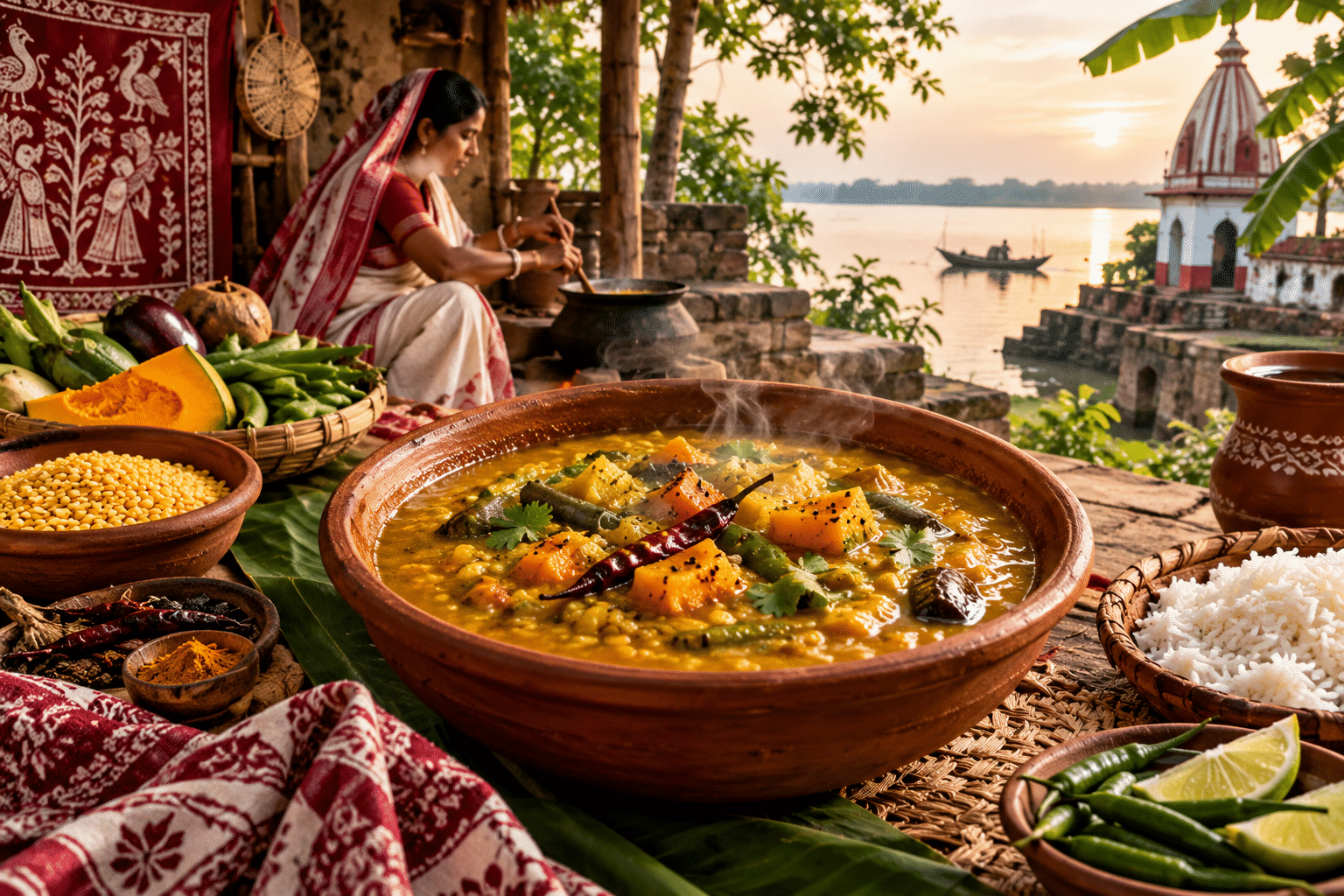
Some dishes do more than satisfy hunger. They carry memories of home, bring families together, and preserve the flavours of generations who came before us. A simple pot of lentils simmering on the stove can tell a story of tradition, hospitality, and the deep connection between food and cultural identity.
Dalma is one such dish, although its cultural roots deserve a little clarification. Dalma is most strongly associated with Odisha, while Bengal has its own rich traditions of dal-based cooking. Across eastern India, lentils have long been an essential part of everyday meals, and each region has developed its own distinctive ways of preparing them. These culinary traditions share ingredients and influences while retaining their individual identities.
What makes dal-based dishes so special is their ability to turn humble ingredients into something deeply comforting. Lentils, vegetables, spices, and a little patience come together in a meal that reflects the resourcefulness of home cooking and the wisdom of generations.
Dalma invites us to explore this wider culinary heritage: the traditions behind the pot, the memories around the dining table, and the cultural stories that continue to live through everyday food.
A Dish Rooted in Tradition
In Odia cuisine, Dalma is a beloved preparation made with lentils and vegetables, often seasoned with spices and finished with a fragrant tempering. Ingredients can vary from household to household, but pigeon peas or other lentils, pumpkin, raw banana, papaya, and other seasonal vegetables may feature in different versions.
Its appeal lies in its balance. The lentils provide a comforting, hearty base, while the vegetables contribute texture, flavour, and natural sweetness. Spices bring warmth without necessarily overwhelming the ingredients themselves.
Dalma is also closely associated with Odisha’s culinary and religious traditions, including the food culture surrounding the Jagannath Temple in Puri. Preparations and practices differ between temple offerings and household recipes, but the dish holds an important place in the region’s broader food heritage.
This connection between everyday cooking and cultural tradition reminds us that food often carries meanings that extend far beyond the ingredients in a recipe.
A dish may be prepared for an ordinary family lunch one day and remembered as part of a festival, a gathering, or a visit home on another. Over time, these repeated experiences turn familiar flavours into lasting memories.
The Comfort of Lentils and Vegetables
There is something wonderfully reassuring about a meal made from ingredients that are simple, accessible, and nourishing.
Lentils have been an important part of food traditions across the Indian subcontinent for centuries. They are versatile, filling, and a valuable source of plant-based protein. When cooked with vegetables, they create meals that can be adapted to seasonal availability, household preferences, and local tastes.
Dalma reflects this practical side of traditional cooking. Rather than relying on elaborate ingredients, it brings together what is available and transforms it through thoughtful preparation.
The vegetables may change with the season. One household might prefer a thicker consistency, while another enjoys a softer, more stew-like preparation. Some cooks favour a gentle spice profile, while others add a more pronounced tempering with cumin, dried red chillies, or other aromatics.
These differences are part of the beauty of home cooking. Recipes are not always fixed instructions written down and followed exactly. They are often living traditions shaped by personal experience, family habits, and the ingredients available in a particular place.
And perhaps that is why a familiar bowl of dal can feel so comforting. It tastes not only of the ingredients but also of the way someone has learned to prepare it.
Food as a Language of Family and Hospitality
Think about the feeling of arriving home to the aroma of a meal that has been cooking for a while. The kitchen is warm, someone is checking the pot, and the table is slowly being prepared. Before the first bite, the food has already created a sense of welcome.
Across many Indian households, dal-based meals have this familiar quality. They are served during everyday lunches and dinners, shared with relatives, and offered to guests as part of ordinary hospitality.
Dalma can be enjoyed with rice, making a satisfying meal that brings together complementary textures and flavours. The combination is uncomplicated, yet it reflects an enduring principle of traditional food culture: a good meal does not need to be extravagant to feel complete.
Food also becomes a way for families to remain connected across generations. Grandparents pass on cooking techniques, parents adapt recipes to changing routines, and younger family members discover traditional dishes in their own way.
Sometimes, the most meaningful recipe is the one that has never been measured precisely. A little more cumin, a handful of vegetables, or an extra moment of simmering may be all it takes for a cook to achieve the familiar taste everyone remembers.
These small decisions preserve a kind of knowledge that cannot always be captured by a written recipe.
Bengal and Odisha: Neighbouring Regions, Distinctive Flavours
The culinary traditions of Bengal and Odisha share a broader eastern Indian food landscape, but each region has its own distinctive identity.
Bengali cuisine is known for its diverse preparations of dal, including musur dal, moong dal, cholar dal, and other varieties cooked with different combinations of spices, vegetables, and tempering ingredients. Depending on the recipe, a Bengali dal may be light and comforting, gently sweet, rich with aromatics, or paired with seasonal produce.
Odisha’s Dalma, meanwhile, is particularly recognised for bringing lentils and vegetables together in one preparation. Its flavour often highlights the relationship between the ingredients rather than relying on a complicated sequence of additions.
Both traditions demonstrate the extraordinary range of regional Indian cooking. Similar ingredients can produce remarkably different dishes depending on local agriculture, cultural practices, culinary preferences, and historical influences.
Recognising these differences is important because cultural appreciation begins with understanding where a dish comes from. Celebrating Dalma alongside Bengal’s rich dal traditions does not require treating them as the same recipe. Instead, it allows us to appreciate how neighbouring regions express their identities through food in distinct yet interconnected ways.
Every regional kitchen has its own vocabulary of flavour, and each deserves to be understood on its own terms.
The Wisdom Behind Traditional Cooking
Traditional dishes often emerge from practical knowledge accumulated over generations.
Cooks learn how different lentils soften, which vegetables hold their shape, when spices release their aromas, and how long a dish needs to simmer for its flavours to come together. Much of this knowledge is developed through observation rather than formal instruction.
Dalma also reflects the value of cooking with seasonal ingredients. Using locally available vegetables can make the dish flexible and accessible, while allowing the flavour to change throughout the year.
This approach remains relevant today. As people become more interested in home cooking, balanced meals, and reducing unnecessary food waste, traditional dishes offer useful inspiration.
Leftover vegetables can often be incorporated into a suitable lentil preparation, and a pot of dal can be adjusted to suit different appetites and preferences. With thoughtful planning, such meals can be both economical and satisfying.
Of course, traditional food should not be reduced to a modern health trend. Its cultural meaning is equally important. The real value lies in recognising how generations of cooks created meals that responded to their communities’ needs while developing distinctive regional flavours.
Keeping Culinary Heritage Alive
As lifestyles become busier and food delivery becomes increasingly convenient, some traditional recipes risk being prepared less frequently in everyday households.
Yet culinary heritage does not have to disappear as lifestyles change. It can adapt through family cooking sessions, community food events, regional festivals, recipe-sharing projects, and the growing interest in documenting traditional preparations.
Younger generations can play an important role by learning from older family members, asking questions about ingredients, and recording the stories behind familiar dishes. Restaurants and food creators can also introduce regional specialities to wider audiences, provided they represent their origins accurately and respectfully.
Preserving a dish means more than keeping its name alive. It means understanding its ingredients, recognising its regional roots, appreciating the people who continue to prepare it, and allowing new generations to develop their own relationships with it.
A recipe remains meaningful when it continues to be cooked, shared, and enjoyed.
A Bowl That Connects Past and Present
Ultimately, the story of Dalma is part of a much larger story about the role of food in shaping cultural identity.
A pot of lentils and vegetables may appear simple, but behind it lies agricultural knowledge, regional taste, household creativity, and the everyday rituals that bring people together. It reflects a tradition in which nourishment and cultural expression exist side by side.
Whether enjoyed as part of an Odia meal or explored alongside Bengal’s distinctive dal preparations, these dishes remind us that some of the most enduring culinary traditions are built from humble ingredients and meaningful connections.
They invite us to slow down, appreciate the work that goes into preparing a meal, and remember that recipes are often carried forward by people rather than books.
Because food is never just about what we eat. It is about the people who taught us to cook, the places that shaped our tastes, and the memories that return with every familiar flavour.
Dalma’s enduring appeal lies in this simple truth: a traditional dish can nourish the body while keeping a community’s stories close to the heart.
One pot, humble ingredients, generations of wisdom—a reminder that the deepest flavours are often the ones rooted in home, heritage, and shared moments around the table.
#Dalma #OdiaCuisine #BengaliFoodCulture #IndianFoodHeritage #TraditionalCooking #RegionalIndianCuisine #CulinaryHeritage #FoodAndCulture #HomeCooking #EasternIndianCuisine #TasteOfTradition #FlavoursOfIndia